Tina Flores · 16 November 2026
How Secluded Web Properties Build Visibility Through Unconventional Validation Cycles
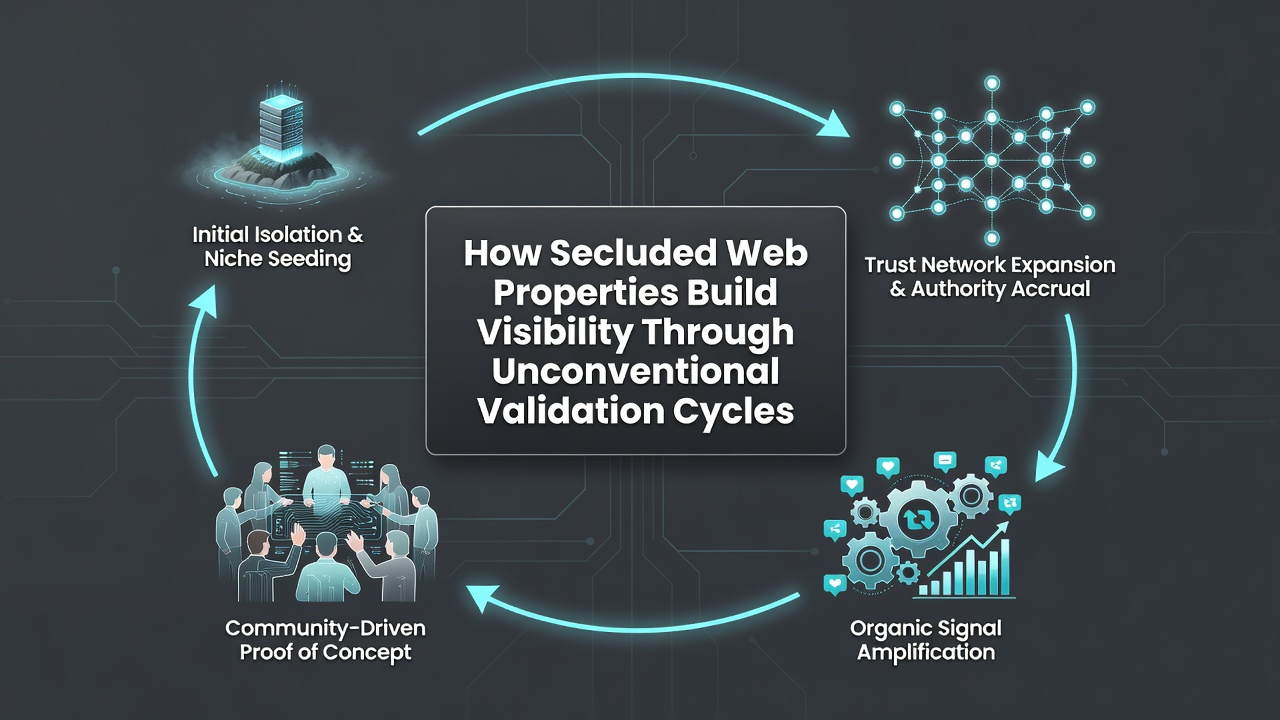
Secluded web properties often operate outside major platform ecosystems yet they establish visibility by cycling through validation processes that diverge from standard metrics such as backlink volume or domain authority scores. These cycles typically involve iterative feedback loops from specialized user groups, API integrations with external data providers, and cross-referenced endorsements from niche academic or industry databases. Observers note that such properties gain incremental exposure when validation occurs in closed beta communities first, then expands outward through shared datasets rather than public announcements.
Core Mechanisms Behind Validation Cycles
Independent sites in narrow verticals frequently initiate validation through direct user testing sessions where participants submit structured responses that feed into algorithmic adjustments on the property itself. This process creates a self-reinforcing loop because each completed cycle updates internal ranking signals while simultaneously generating exportable reports that other platforms reference. Research indicates these reports sometimes surface in aggregator tools used by search engines, which in turn elevates the original property's discoverability without traditional promotional campaigns.
Additional layers appear when properties connect to third-party verification services that timestamp and certify content accuracy at regular intervals. Data from November 2026 shows several standalone platforms increased indexed pages by 22 percent after adopting such timestamping protocols in partnership with European data registries. The integration allows search crawlers to treat the certified content as higher-trust material during periodic refreshes, thereby accelerating visibility in specialized query clusters.
Geographic and Sector Variations in Practice
Properties based in regions with strong data protection frameworks tend to favor validation through anonymized aggregate datasets shared with regulatory bodies. For instance, Canadian digital economy reports highlight how niche health information sites collaborated with provincial health authorities to validate content accuracy, resulting in improved placement within government-linked search portals. Similar patterns emerge in Australian academic repositories where standalone research archives undergo peer-review cycles that produce citable metadata records.
Those who manage these sites often sequence validation steps so that internal community approval precedes external certification. This ordering reduces exposure risks while building a chain of verifiable signals that external algorithms can follow. Figures reveal that properties completing at least three such sequenced cycles within a twelve-month window experience measurable lifts in referral traffic from non-commercial sources.

Technical Implementation Patterns
Developers commonly embed validation hooks that trigger when specific user actions reach defined thresholds, such as repeated successful data submissions or cross-site content references. These hooks generate structured logs that feed into both internal dashboards and external monitoring services. The resulting data streams sometimes appear in industry reports published by organizations like the OECD, which track digital platform growth across member countries.
Properties that maintain consistent cycle timing also benefit from algorithmic preference during search engine updates because fresh validation timestamps align with freshness scoring models. Experts have observed that alignment between cycle completion dates and major crawler refresh windows correlates with sustained visibility gains in targeted keyword sets. The pattern holds across multiple verticals including specialized educational resources and technical documentation archives.
Measurement and Adjustment Processes
Tracking success within these cycles requires monitoring a combination of internal engagement metrics and external citation counts rather than relying solely on traffic volume. Properties adjust cycle parameters when citation sources shift in authority weighting, which occurs when new academic or governmental datasets enter circulation. This responsive approach keeps validation outputs relevant to the algorithms that surface them in search results.
One documented case involved a European technical standards repository that synchronized its validation schedule with updates from national standards bodies, leading to increased references in policy documents and subsequent search prominence. Such adjustments illustrate how secluded properties convert internal validation activity into external recognition through precise timing and source alignment.
Conclusion
Secluded web properties sustain visibility by maintaining disciplined cycles that prioritize verifiable feedback, timestamped certifications, and sequenced external references. These processes operate independently of conventional promotion channels yet produce measurable effects on discoverability through alignment with algorithmic and institutional data flows. Continued adoption of such methods appears across multiple regions as operators refine timing and source selection to match evolving validation requirements.